Keeping Kids Grounded and Moving in Winter With Yogi Beans Yoga
Keeping any resolutions around movement and mindfulness may feel difficult as winter continues—especially if you’re cooped up inside with kids! Incorporating yoga into your routine might be the answer, even if your little ones are toddlers. We caught up with Lauren Chaitoff, founder and CVO of Yogi Beans, a children’s yoga and wellness organization that offers yoga classes, mindfulness, and social-emotional learning programs, and teacher training for kids, families, educators, and yoga instructors, to learn more.
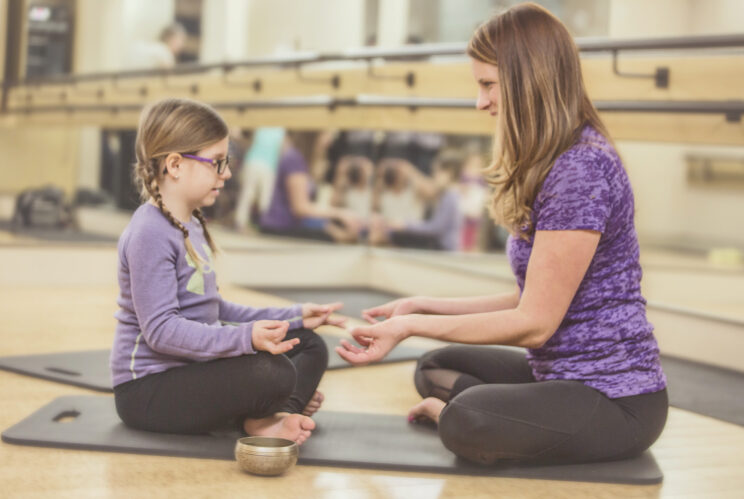
Why Yoga Is Awesome for Kids, Especially in the Winter
Before we talk about movement, let’s focus on perhaps yoga’s most important use when it comes to kids. Lauren tells us that the best tool for self-regulation and emotional awareness is breath. “We tell kids, ‘When we change the way we breathe, we can change the way we feel,’” Lauren says. “That simple idea is powerful, especially in winter when outdoor movement is limited.”
The best part? Lauren reminds us that breathwork and some simple yoga movements don’t require a ton of space. “[Yoga] can happen in the living room, a bedroom, even on the way to school, which makes it perfect for those colder months,” Lauren tells us. “You can practice Tree Pose while brushing your teeth, or take a few belly breaths before bed. If your child has lots of winter energy, try a quick movement burst like hopping from Down Dog into Frog Pose (a squat) 10 times. It’s playful, it wiggles out fast, and it can happen in a tiny space.”
The Benefits of Starting Yoga Young
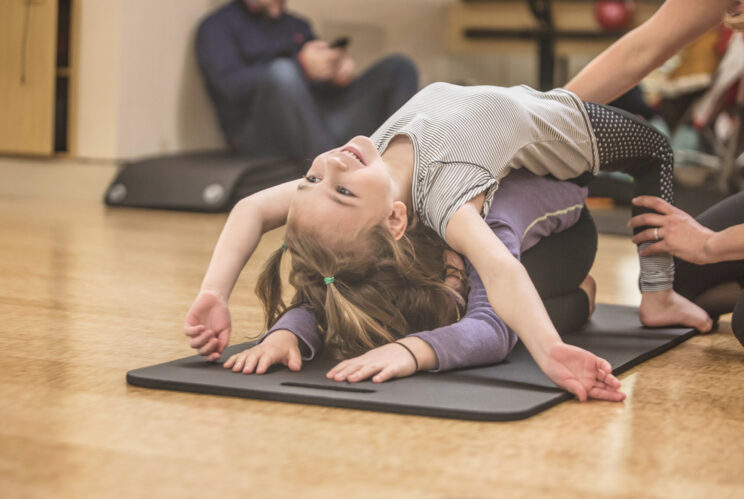
Yoga is often associated with adults, but Lauren sings its praises for starting as young as possible. “Yoga helps children reduce stress and anxiety, and it strengthens the mind-body connection,” she says. “You see it when a child gets a bellyache on Sunday night before school, or a headache when they’re worried about something. Yoga gives them a way to notice what’s happening inside their body and respond with awareness.”
Lauren says one of the biggest benefits of yoga for the younger set is helping kids build up positive self-talk. “In class, they practice using words of loving kindness toward themselves, especially when something feels hard,” she tells us. “That self-compassion becomes the foundation, and from there it naturally ripples outward into more kindness and empathy for others.”
Be mindful, though, that yoga with a toddler will look a lot different than it will with a teen. With toddlers: “We’re planting seeds through playful movement and simple breathing, helping them notice their bodies, name what they feel, and start to calm themselves in a safe, fun way,” Lauren explains. As children get older, self-discipline and body awareness come more into play. They might start holding a pose a little longer, or pay closer attention to what their breath is doing. Discussion is also increasingly woven into class.
No matter the age, yoga is a great alternative for kids who struggle to find their niche in traditional competitive activities. “In yoga class, they don’t have to win, lose, or prove anything,” Lauren tells us. “I was never into team sports growing up, and I didn’t feel like I had an outlet that fit me. Yoga can be that outlet for the non-competitive child, and for the competitive child, too. It gives every kid a space where they can show up exactly as they are, connect to their body, and feel successful without pressure.”
Simple Tips to Incorporate Yogi Beans Yoga at Home
If families are looking to really incorporate yoga into their homes and routines, Yogi Beans takes a holistic, non-clinical approach, and breaks yoga down into four pillars: Yoga Mind, Yoga Heart, Yoga Body, and the Yogic Way. Here’s how families can incorporate these at home, according to Lauren:
• Yoga Mind (focus and mindfulness):
A few breaths can do wonders. At night, place a stuffed animal on your child’s belly and invite them to rock it up and down with their breath. They watch it rise and fall, and you remind them that deep belly breaths like this can help when big feelings show up.
• Yoga Heart (confidence and self-compassion):
We love “I Am” affirmations. Ask your child to finish the sentence “I am…” and talk about why the words they choose matter. It’s one of the earliest ways to teach kind self-talk.
• Yoga Body (movement and coordination):
Kids love poses inspired by animals and nature, which makes yoga feel like play. Tree Pose is a favorite because balancing is exciting. Choose one spot in the room to look at, explain that looking at one thing helps the brain focus, then try Tree together. Start with the foot low on the leg or even on the ankle.
• Yogic Way (how we show up in the world):
This is practicing patience, gratitude, and noticing how our actions affect others. It can be as simple as ending the day with a breath and a “thank you for today.”
And if families want more support, Lauren notes that Yogi Beans offers small-group classes in Related buildings, plus private groups in residents’ homes, which can be a fun option for siblings or a group of friends.
If going all-in feels overwhelming, Lauren says that even incorporating small elements of a yoga practice on a consistent basis can help. “Start with a few mindful moments that fit naturally into your day,” she says. “Maybe that’s three deep belly breaths together before school, a stretch after homework, or a tiny reset before bed. It doesn’t have to be a full yoga class to matter. Those small touch points add up.”
How Yoga Helps Kids at School

In addition to offering private yoga practices for children, Yogi Beans also partners with many schools and early childhood centers across New York City, including child care and early learning services like Vivvi. Yogi Beans’ school programs run the gamut from residencies to weekly enrichment programs to yoga as a supplement for a school’s physical education program. However you incorporate yoga, Lauren says the goal is to create a classroom where kids have a way to regulate, so that they can focus on learning.
Here’s feedback from a third-grade teacher that Yogi Beans has worked with since the beginning of the school year:
• “The kids actually love it. They get excited when they see yoga in the schedule, and we’ve noticed how eager they are during those days.”
• “The yoga residency gives my students a much-needed midday break to unwind and decompress. It allows them to reset, refocus, and return to class feeling calmer and more engaged.”
• “The students love the sessions and look forward to yoga whenever it is on our schedule.”
Looking to get yoga into your child’s school? Lauren advises advocating for it, saying “schools are often looking for programs that support emotional regulation, focus, and classroom community, and yoga checks all those boxes.”
The Bottom Line: Make Yoga Work for Your Family
Whether you’re aiming to dive headfirst into yoga practice, trying to include just a few elements in your family’s day, or curious about yoga at your child’s school, Yogi Beans can help. Additionally, many playful, child-friendly poses are featured in Lauren’s book 108 Awesome Yoga Poses for Kids, which is a great visual tool for families to reference and start or continue practicing yoga at home.
The Related Life is written and produced by the Related Life Editorial Team. Be sure to follow us on Facebook and Instagram for the latest events, news, and announcements in your area, and tag us for a chance to be featured @therelatedlife and #therelatedlife.